

Why We Focus on Mice, Not Every Pest
We work on mice and rats, not every bug that shows up in a Truckee house. That focus means we know how a house mouse moves through a kitchen and how a deer mouse gets into an attic, instead of treating every rodent the same way a general exterminator would.
House Mice and Deer Mice in Truckee
Two kinds of mice cause almost every call in this area, and they don't act the same way.
| Mouse Type | Where It's Found | What Gives It Away |
|---|---|---|
| House Mouse | Kitchens, pantries, and garages, close to food | Small droppings near food storage, gnaw marks on packaging |
| Deer Mouse | Attics, wall voids, and storage areas | Droppings in the attic, nests made from shredded paper or insulation, and a higher hantavirus risk |
House mice stay close to food and water, so they rarely travel more than a few feet from their nest. Deer mice climb well and often end up higher in a house, in the attic or behind stored boxes.
How Do I Know If It's Mice and Not Rats?
Mouse droppings are small, about the size of a grain of rice, while rat droppings are larger and rounder. A mouse can also fit through a gap the size of a quarter inch, while a rat needs a gap closer to the size of a coin.
Why Mice Get Into Truckee Homes After the First Freeze
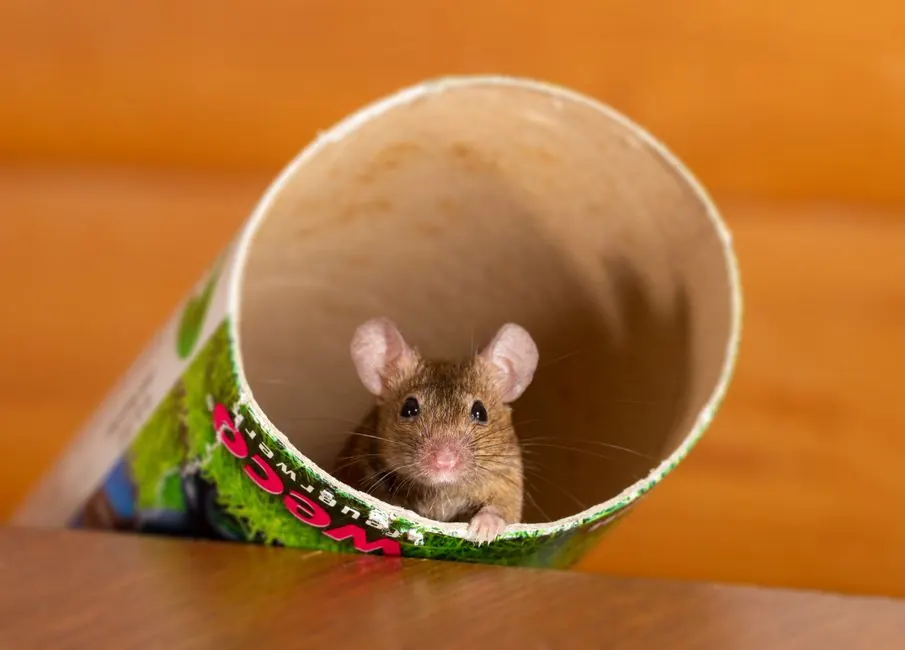
Cold weather pushes mice indoors looking for food and warmth, and a Truckee winter gives them plenty of chances to get in. According to the University of Kentucky Extension, house mice are especially likely to move indoors during their fall migration in search of warmth, food, and shelter. Once inside, a mouse doesn't travel far. It usually stays within a few feet of its nest, which is why one mouse in a pantry often means a nest somewhere close by, not just a single visitor passing through.
How We Remove Mice
Mice control takes more than a few traps under the sink. A mouse nest left in place keeps producing more mice, since a female can have several litters in a single year, so the work has to find the nest and the entry point, not just the mouse you saw.
We start by checking the kitchen, pantry, attic, and garage for droppings, gnaw marks, and grease trails along walls, since mice tend to travel the same path along an edge every time. Traps get placed along that path, not just near the food source. We skip poison in most homes, since a mouse that dies inside a wall can leave a smell for weeks. Once the mice are gone, we close the gap they used with steel mesh or metal flashing, sized to the actual opening.
How Fast Can Mice Take Over a House?
A single mouse can lead to a much bigger problem quickly, since a female mouse can have several litters in a year with multiple pups each time. What looks like one mouse in October can turn into a real infestation within a few weeks if the entry point never gets sealed.
Protecting Second Homes and Rentals from Mice
A kitchen or pantry that sits untouched for weeks gives mice an easy, undisturbed food source, which makes a second home near Prosser Lakeview or Donner Lake an easy target between visits. Since mice stay close to their nest, one that settles into a pantry can go unnoticed until an owner arrives and finds droppings or chewed packaging. We take photos of everything we find, so an owner who wasn't there can see exactly what happened and what got fixed.

Signs of a Mice Problem in Truckee
- Small droppings near food storage, about the size of a grain of rice
- Gnaw marks on food packaging, boxes, or wiring
- A musky smell in closets or under sinks
- Scratching sounds in the walls or attic at night
- Grease marks along a wall where a mouse repeats the same path
Frequently Asked Questions
Why Do Mice Come Inside During Winter?
Do Home Remedies Like Peppermint Oil Actually Work?
How Small a Gap Can a Mouse Fit Through?
Are Mice Dangerous to Health?
Do I Need to Bait the Traps?
Get in Touch
A quick conversation tells you exactly what's going on in your house and what it takes to fix it, before the problem gets any bigger.